“The writer has to force himself to work. He has to make his own hours and if he doesn’t go to his desk at all there is nobody to scold him.”
Roald Dahl
We’ve all been there. Staring at the blank page, or empty screen. Thinking.
“Man. I really don’t wanna write.“
I think it a fair assumption that most, if not all, people who choose to spend their free time writing, come into the craft with an interest. A passion. Something inside them that–on some base level–enjoys writing. Enjoys the craft of telling stories.
I know I do.
And yet whenever the time comes to write, I sit down and think of all the other things I could be doing.
Do you know Crusader Kings 3 just came out? I can tell you it has been something of a distraction for me. Why should I spend my time writing down my garbage stories, editing my pathetic prose, or actually structuring my plots, when I could instead be throwing hours into something that gives me instant satisfaction?
But there is one tool in your arsenal. One final weapon to help you fend off the lurking monster of procrastination. And it’s the same reason you’re procrastinating to begin with.
You can do whatever you want.
And you can write what you want to write.
“A person is a fool to become a writer. His only compensation is absolute freedom.”
Roald Dahl
At moments like these, I need to come back to why I enjoy writing to begin with.
Not the gritty elements of story and plot that I’ve decided I need to cover ahead of time. But the simple pleasure in writing pieces, not because I need to, not because the plot of my story demands it, but simply because I enjoy writing.
I go back to writing things I like writing.
We all have something we cannot help but enjoy writing. Characters that make us chuckle, events that bring a smile.
So go back to writing a scene you know you’ll love to write, just for thirty minutes or so. To remind you why you enjoy doing this. Maybe it’s a comic rogue in your story. Maybe it’s an action scene with characters using impractically large swords that Freud would have a field day with. Maybe it’s a blog post relating story craft to Italian cuisine. Who knows better than you?
If you’re feeling down, remind yourself why you started doing this to begin with. You’ll write better for it.
Did you enjoy this?
Come chat to us, we run a weekly writing circle on Discord, involving writers of prose and screenplays alike. If you’re interesting in joining, feel free to reach out to us at fellowshipofink@gmail.com, or via our twitter.
If you’re reading this it’s a safe bet that you want to be a better writer. And if you want to be a great guitarist then you’d want to play the best songs, right? So why on earth should you read shitty writing, or watch poorly written films?
Because great writing can be a little too good. *
It still has its place, I’ve written out parts the Great Gatsby myself, and parts of screenplays too. I wouldn’t do that with a poorly written piece. But less well-woven pieces of art have a distinct advantage over better writing, for our purpose of learning.
You can see the cogs.
One of the incredible things about great writing is that you can’t see the cogs at all, not unless you already know where to look for them. The conversations feel natural, the exposition is hidden somewhere you can barely see, you’re drawn into empathy with the characters before you even know what’s going on.
A good scene has at least twenty things going on underneath the surface, and without someone there to hold your hand and explain each one they’re all invisible. But not in bad writing.
In bad writing, by seeing the flaws, we see how not to do it. Personally, I think it’s immoral to hold any writer, successful or not, up in public as “bad”, regardless of what popular opinion says. As such all the examples here are my own made up for your viewing pleasure.
“I love you,” she said, stroking his arm.
“I hate you,” he replied, eyes blazing with anger.
So, when you read something like this, and you feel that disconnect in your gut that says oof, that ain’t working for me boss. It’s worth stopping and asking why. I wrote this to illustrate why subtext is important in dialogue, so let’s try and make it a little nicer.
“I love you,” she said, stroking his arm.
“I love you” he replied, eyes blazing with anger.
Alright, so that’s a little better, he’s saying something that implies the complete opposite to what he’s doing. So we learnt something, scenes work better when there’s a juxtaposition between what people say and what they do.
This is another part of my, unsurprising, advocation for critiqueing groups. Reading and critiqueing others is a great learning tool for yourself as a writer, as not only are you learning from your own mistakes, you’re learning from theirs as well.
So, next time you read a piece of writing and feel that disconnect. Stop reading for a second and work out why that moment or that line didn’t land for you, you’ll learn from their mistake without the pain of having to repeat it yourself.
Then your oof, that ain’t working for me boss turns from a moment of disappointment into a moment of intrigue, and gets you wondering what’s the lesson here?
Ask that time enough and you’re enjoying media that you love, whilst learning how to be a better writer. If that ain’t living the dream, I don’t know what is.
“Learn from the mistakes of others. You can’t live long enough to make them all yourself.”
― Eleanor Roosevelt
*For ease of communication I arbitrarily talked about “bad” and “good” writing throughout this post. They don’t exist. There is simply more refined and less refined writing: if you could write what’s in your heart it’d be perfect on the page. It just takes a lot of years to get your grubby little fingers to type the words in the right order. But that’s a post for another time.
“Writing without revising is the literary equivalent of waltzing gaily out of the house in your underwear.”
Patricia Fuller
I’ve read writers who’ve written several books, on one after another. But when you read through them it’s evident they’re stuck making the same mistakes again and again. Why?
Because the learning is in the editing.
On good days writing a great scene is effortless. Other times it’s like pulling ugly knives out of your urethra. Alas, neither of these helps you become a better writer.
It’s like drawing a face. Doing it well enough to complete a gorgeous face or poorly enough that you’re embarrassed to show anyone doesn’t actually help. It’s only when you sit down and work out the difference between the face you drew and one drawn by a truly great artist that you take a step towards becoming a better artist yourself.
It’s the same with writing, only the difference is that after you’ve just written something you’re usually half blind to whether it’s actually good or not. It’s only after a bit of time, and learning, and being critiqued, that you can edit it to make it better and grow as a writer.
It’s in worming out your mistakes and reworking them that you learn your errors, and improve as a writer by inculcating their solutions.
This, unfortunately, sucks.
It feels like like taking a test you thought you got an A* in and wriggling through each answer to work out how you only managed an F-
“While writing is like a joyful release, editing is a prison where the bars are my former intentions and the abusive warden my own neuroticism.”
Tiffany Madison
You’re slamming your head up against your own pointy blades of failure. That’s why so many writers struggle to improve. You end up seeing people who’ve been writing for ten years at the same level as they were in that first year, blaming anything except the fact that they haven’t progressed as a writer.
You’ll see this regurgitated by other writers as well, they’ll tell you “starting books doesn’t help, finishing books does.”
This is because when you finish a story you naturally have to go back and edit it.
Correct the pacing, the structure, the prose and all those tiny things you never even thought were issues until a beta reader comes back to you and says “you use and a lot” and you end up searching through every instance of “and” in all 250 pages of your manuscript, tearing your hair out strand by strand whilst trying to work out which ones are justified.
Then you write the next book, and when you’re you’re about to say “and” you stop yourself. And you figure out whether it’s the right word or just the easiest. Congratulations! You’re improved slightly as a writer. Years upon years of that and you’ll be able to crack out some really good shit.
“The reason that clichés become clichés is that they are the hammers and screwdrivers in the toolbox of communication.”
Terry Pratchett
It’s the Holy Grail of critique, and the Achilles Heel to any well written story. Writers stay awake a night, trembling in fear at the mere thought of that most hated accusation.
The dreaded words: “Bit of a cliché.”
I doubt that there’s a single writer out there who hasn’t being given that feedback. Whether it’s a character checking out their reflection in a mirror, the villain screaming “I shall have my revenge!”, or our hero rescueing a cat from a tree. At some point everyone stumbles into the same dark pit.
And there’s good reason to rail against the cliché. It’s disappointing to read something sold as original, that’s simply as old material repackaged in a new story. If I’m forced to watch yet another superhero become tragically orphaned at a young age, I might have to pry out my eyeballs with a teaspoon.
However.
As with all things in writing (and probably life, though I’m not wise enough to make that call), we shouldn’t be too quick to discard an idea simply based on popular opinion. As Steve Jobs said:
“Screw the consumer.”
Sorry, I meant:
“People don’t know what they want until you show it to them.”
Steve Jobs
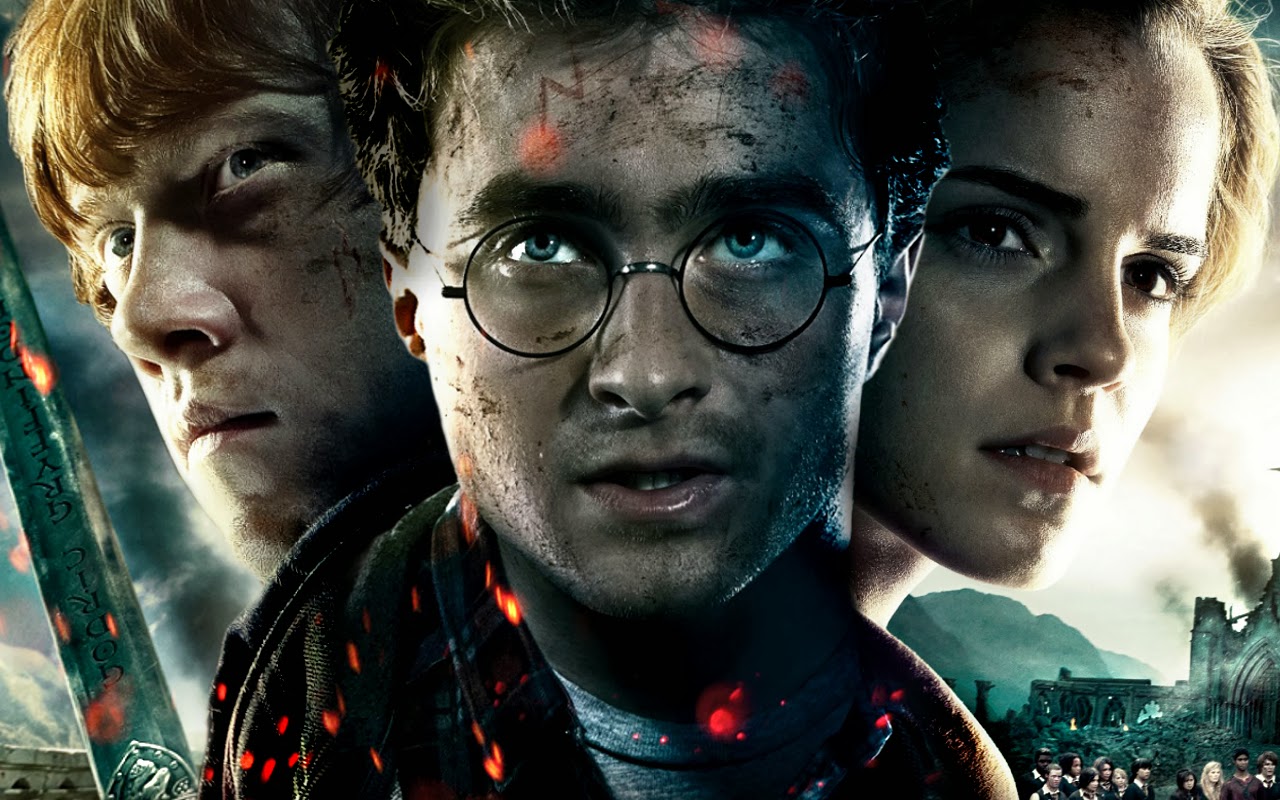
The dirty truth of it is, that while we often belittle clichés when directly confronted with them, most readers (myself included) will eat them up so long as they’re well used. Harry Potter has to be the most cliché-ridden character in history
Orphan? Check
Special Powers? Check
Trusty sidekicks? Check
Even special-er powers? Check
Sneering, posh rival? Check
Specialist powers? Check
Evil wizard trying to take over the world defeated by the literal power of love? Check
And yet somehow, despite the internet’s clearly superior knowledge of clichés and how to avoid them, J.K. has created a billion dollar franchise, while Dave from Reddit still dwells in r/writing.
Because secretly, we all love a cliché. Shameful though it is.
Clichés are like salt in a good meal. A little is great. Who doesn’t like a little bit of seasoning? Well blended into food, everything tastes better because of it. Just because you wouldn’t pour a tablespoon of salt on your omelette, doesn’t mean that you’d ban salt from the house.
In the same way, don’t be too frightened when the Spanish Inquisition jumps on your heretical cliché.
Sure, maybe it could go. It’s entirely possible that the prophecy stating your main character is uber special — and also probably the child of a god — is a little much. On the other hand, that’s also the basis for about five dozen young adult franchises.
A cliché isn’t the killing blow for your story. A poorly written one is.
Imagine you wanted a show with a huge cast and a story spanning over a hundred years. Now imagine you wanted the show to slip between characters at will, despite the time gap. How would we keep our audience grounded, while keeping the different arcs intertwined so that the momentum never stalls but simply swells?
Well I’ve been watching Dark on Netflix recently, an incredibly well written show, that’s relentlessly ambitious and complicated.
In addition to it’s convoluted structure, it’s an off-beat mystery show, so it’s inevitably hard to work out what exactly is going on from the puzzle pieces we’re given.
So with such wide variance in what we’re watching how do the showrunners manage to create a sense of congruence throughout the show, so that we always know where we are and what to expect.
Tone.
There is a pervasive and ever-building sense of dread in the tone of the show. No matter what character we’re following, what time we’re in, it follows us like the stench of death in the air. This helps everything feel congruent. When things take a turn or we begin to follow an entirely new storyline, instead of having to build momentum from the beginning it naturally slots into the monumental tone of suspense.
Every single scene adds to this tone, swelling it, feeding it. Becoming enveloped by it.
So Tone becomes our anchor, whether we’re deep in the past or revisiting a character we haven’t seen for 8 hours it bouys us from scene to scene swelling word by word, image by image.
That’s the power of tone. When used expertly it can become more than a character in itself.
*Of course this varies by genre, Naked Gun has a very clear tone, but certainly not a swelling one.
“It’s not what you said, it was the way you said it.”
Every ex-girlfriend ever.
How you describe a room or a character is vital. This isn’t the same as voice, that’ll come later, I’m talking about moment to moment descriptions of objects, surroundings, sounds, smells. These are the brush by which you paint your world.
Here’s an example.
He closed the door quite quickly.
Or
He slammed it.
Which is more immediate, more impactful?
Which gave you a strong image, and which did you have to unpack?
80% of improving prose is one simple action.
Cutting unnecessary words.*
Until you’ve been writing long enough that you’ve got a grasp of your voice, this rule will be a guiding star towards simplicity, and efficiency on the page.
And headed towards writing lines like:
“Memory believes before knowing remembers.”
Faulkner
But lets step down from literary loftiness towards our lowly level. Here we can see how this works practically.
“She was quite tall and blonde and lovely, really just a strange out-of-time amazon drifted in from some far away shore.
Can work even better as:
“She was an amazon, drifted in from some far-away time.”
We’ve cut 10 words, and yet doesn’t that sound more poignant, more poetic?
This is part of why you’ve probably heard the advice to cut adverbs and replace them with stronger verbs: less words with more meaning is as close to objectively better as prose gets.
I heard stories of a comedian who’d sit at the back of a show, counting the syllables in jokes, cause if he knew he could get the same joke across in just one less syllable, it’d be funnier.
Case in point
In the beginning there was nothing, which exploded.
Pretty funny image, from the masterful, late, beyond-great Mr Terry Pratchett, but if we compare it to the example below:
“In the beginning there was absolutely, positively nothing at all. Then, all of a sudden, it exploded.
Isn’t that shite?
I cheated here a little, I admit, a lot of the joke comes from it’s brevity, but isn’t that the point?
All that being said, some writers who know their voice well will be quite eloquent with many uneccessary words, here’s a piece that’s meant to meander from Falkner’s As I lay dying:
“In a strange room you must empty yourself for sleep. And before you are emptied for sleep, what are you. And when you are emptied for sleep, you are not. And when you are filled with sleep, you never were. I don’t know what I am. I don’t know if I am or not. Jewel knows he is, because he does not know that he does not know whether he is or not. He cannot empty himself for sleep because he is not what he is and he is what he is not. Beyond the unlamped wall I can hear the rain shaping the wagon that is ours, the load that is no longer theirs that felled and sawed it nor yet theirs that bought it and which is not ours either, lie on our wagon though it does, since only the wind and the rain shape it only to Jewel and me, that are not asleep. And since sleep is is-not and rain and wind are was, it is not. Yet the wagon is, because when the wagon is was, Addie Bundren will not be. And Jewel is, so Addie Bundren must be. And then I must be, or I could not empty myself for sleep in a strange room. And so if I am not emptied yet, I am is.”
There’s a lot of words he could’ve cut here, a lot. But the passage is deliberately obtuse and convoluted to reflect the character’s mind.
You aren’t Faulkner… yet.
*Don’t shy aware from spending your word budget to establish tone or go to town on a piece of description though, if a metaphor works better than a strong verb, go for it. This is a sentence by sentence rule, I’m not saying that a 300k book is worse than a 30k one.
Even in dialogue, as you’ll see in the next tier, this same rule is key.
So you’re poured over a year of your life into a manuscript. Countless hours pondering the correct word, laid awake at night untangling a plot knot, and it’s finally done. The best it can be, so you cross your fingers and send it out to an agent. They pop it open and within five pages they close it. Never to be opened again.
Why?
Because even if I weren’t to tell you which is which, you’d know which one of these is a better guitarist, even if you know nothing about playing guitar.*
Similarly good writing leaps off the page and grabs you by the collar, yanks your head into it’s world and says “Watch this shit”
So let’s see what that looks like in a film, this opening versus this one. One is fine, one is incredible. The amount of character, tone and sheer likeability Edgar Wright fits into that opening is ridiculous.
Similarly refined prose and unrefined prose is easy to tell apart quite quickly, especially with extremes like these
“Let us go then you and I
When the evening is spread out against the sky
Like a patient etherised upon a table.”
T.S. Eliot, The Love Song of J. Alfred Prufrock
Versus
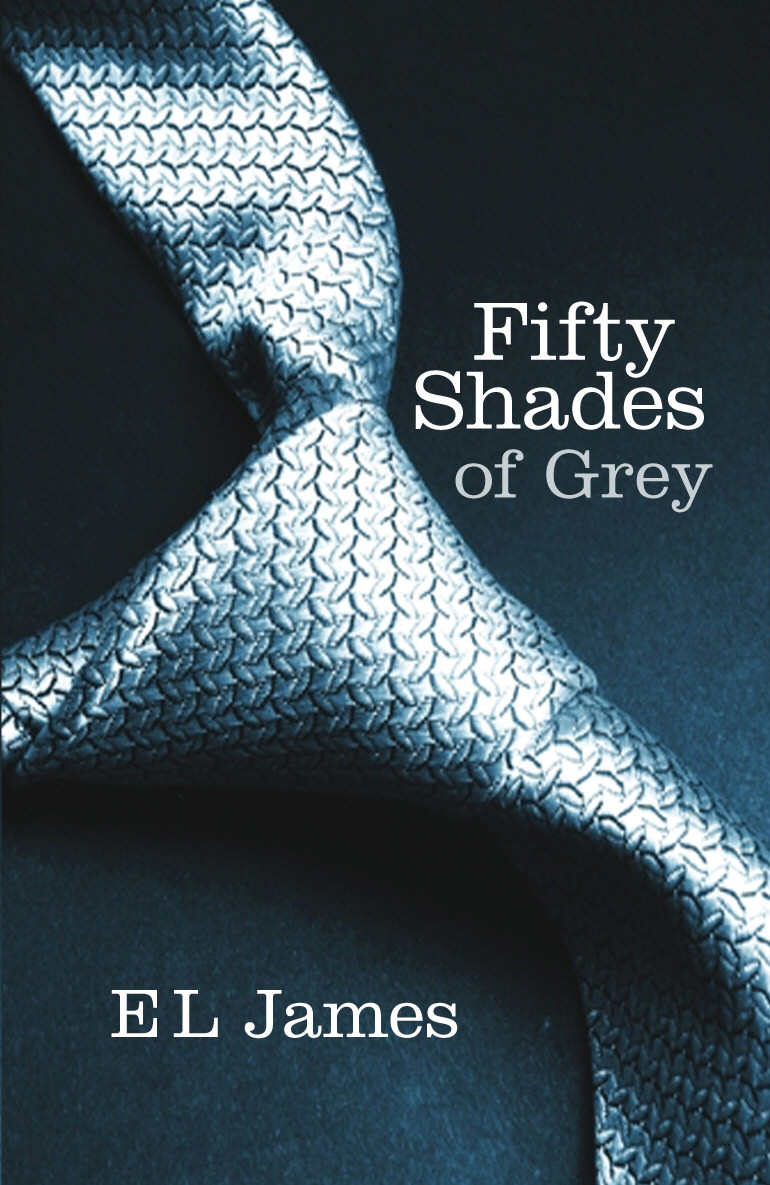
“Don’t you like the butt drawer?”
E. L. James, Fifty Shades of Grey
Generally I can judge within or 6 pages whether I’ll like something or not. And once that first impression is set, carrying on I’ve never been proven wrong, unfortunately. And I read absolutely nothing compared to the people you’ll be putting your manuscripts in front of. Imagine how much more quickly you’ll have to grab them as a writer?
So how do you start out on the right foot, how do you win people over onto your side immediately and keep them firmly in your corner, so much so that they’re willing to actually fight to get your manuscript made over all the others?
Well, lets ask ourselves. What’s the basic purpose of a book?
To get the reader to turn the page.
That’s it. If I pick your book up and finish it before I put it down, you’ve done an awesome job, better than Jane Austen did with me. That’s what you want from a reader. For them to be unable to put the damn book down. Reading the last of Enders game at 3am, fighting off sleep to see what happens next.
What causes that?
You need two things, rarely you can get away with one, but both is always better.
1) Make us care
“The test of good fiction is that you care for the characters”
Mark Twain (paraphrased for sexiness)
Stories are fundamentally broken if they’re not rooted in characters we care about.**
Wait, what’s that thought you just had about your work in progress?
But it’s a horror!
But it’s a thriller!
But the plot twist!
But they’re an anti-hero!
I don’t give a flying fuck if your protagonist is Hitler himself.
We need empathy rooted in a character. Writers have made us empathise with serial killers, Dexter, and even child molesters, Happiness. Good writing has the incredible power to bring empathy to something completely unimaginable, even in song.
I’ll write an article on how to do this at some point, so watch this -> space. <-
For example, In the scene above Baby is robbing a bank with a bunch of criminals, yet the writing shows off such an enjoyable side of his personality that you’re instantly onside with him. He doesn’t even have to say anything for us to want him to get away with putting people’s lives at risk. That’s great writing.
If you really don’t want to root our empathy in your character, or you’re not sure how, then at the very least, root our interest.
2) Make us fascinated
I think one of the best examples of this is a blacklist script called The Traveller.
A man is driving to work one day, in a normal world. Everything is calm it’s 7:55
Suddenly, he’s rolling across the road, car nowhere to be seen.
And it’s tomorrow.
He goes home, confused, and tries to rationalise it. He settles down to relax with his wife and son.
Then, at work, come 7:55 he skips two days into the future.
He’s terrified. He doesn’t understand what’s happening, or why. Desperate, he stands in front of his wife at 7:55
And rearrives with her in tears he’s been gone four days. It’s getting worse.
How am I gonna put the book down after reading that?
The utter strangeness of it was enthralling, I simply had to know what was happening to ruin this man’s life. Why it was happening to him at 7:55
Often prologues set this up for stories, for example, showing us a man realising he’s insane and turning into a goddamn mountain. What an opening that is from Wheel of Time.
Similarly the 2012 intro from above tries to set this up, the sun is being extra hot or whatever, but it’s a little redundant at this point by virtue of the fact that we’re watching a film called 2012: no-one in the cinema was curious for a second if that was gonna be bad. They’d all seen the trailers.
The scene is also kinda redundant in that we’ve seen many, many scenes like it before, you’re much better off using a scene that’s a completely original approach to it.
So make us care, make us fascinated or we’ll put it down.
That’s it.
If you haven’t done one of these, or preferably both, by the end of page 5 then you’re probably in the slush pile I’m afraid.
And if you can make M.J. Sayer’s steel heart bleed then you’re onto a winner. Or you messed up the proportions on your calzone.
“If it’s bad on page six, it’s bad to the end.”
– John August
* Nothing against the girl: she’s a fine guitarist, but John Gomme is one of the best on the planet.
** A caveat is that with really avante-garde stuff, this isn’t necessarily the case. But if you’re writing crazy avante-garde stuff than you probably read this sentence as a challenge anyway… go make something insane.
Whether it’s a written story or Italian cuisine, even the best ingredients need to be well layered
Once upon a time, in an ‘Italian’ restaurant surprisingly close to my house, I ordered a calzone. Because what could be better than a pizza cooked by an Englishman, and then turned into an oversized pasty?
I waited for my calzone with barely suppressed joy in my heart. God, I love a calzone. I could already picture the tomato, cheese and ham all sandwiched into one delicious savoury bite.
…I don’t eat out a lot.
When it arrived, it looked perfect. Golden-brown, beautiful smells, on a giant piece of slate for some reason. This was my heaven.
The waiter offered me pepper, which was odd, and left me to enjoy the culinary marvel. Or so I thought. On reflection, I suspect he was simply fleeing the scene of the crime.
For you see, when I took that first innocent bite, I did not enjoy a mouthful of tomato, cheese and ham all sandwiched into one. Instead, I got a mouthful of ham.
Which was peculiar. Calzones do not usually come with just ham. In my naivety I presumed this must simply be coincidence. A stroke of bad luck. An unfortunate incident where a cluster of ham had formed within the calzone, that I had just happened to hit.
In short, I was willing to forgive.
But to my horror, what did I find in my next bite, but another mouthful of ham. I was aghast. And so, I did the unthinkable. I opened it up.
What I saw there will stay with me until my dying day.
Some monster, daring to call themselves a cook, had thrown a handful of tomatoes into the base of the calzone, followed by a fistful of cheese and roughly a wheelbarrow’s worth of ham.
It had resulted in three distinct sections to the calzone. Ham, cheese and tomato. No overlap, no blending of tastes. It was the Berlin Wall all over again.
I experienced a number of emotions. Disgust. Grief. Rage.
But now, years later, I’m willing to look back and think upon that dark time in my life with a new mindset. One of desperation for something to write about. But also one of sympathy.
Sure, that cook was a criminal. I don’t think I’ve hated anyone more in my life. But their mistakes weren’t fundamental to their talents. The individual parts of the dish had been cooked to perfection. It was in the assembly that the culinary war crime found its roots.
And that’s a struggle I can relate to.
Often when writing, I find that I have the raw ingredients to a good story. I can have great characters, a cool world, superb dialogue and absolutely staggering levels of humility. But when I put it all together, I can find it falls apart.
Many is the time that I have found myself assessing my work, thinking,
“Well this part’s good.”
“And so is this part.”
“Man that’s hilarious.”
“Great job, me.”
But only to come to the sticking point.
“So why doesn’t it work together?”
Stories are like a good calzone. The ingredients need to be layered, not separated.
A whole chapter of great dialogue is going to bore the reader if it doesn’t include elements vital to the plot. A scene depicting how the intricately awesome magic system works is going to send the audience to Snoozeville if it doesn’t also include emotional beats.
So while that cook is hopefully swinging by a noose in some Italian village by now, I can thank them for the lesson they taught me, and the inspiration for this post.
Despite our amazing talents, only by combining the cheese of our characters, the tomatoes of our world-building, and the ham of our plots can we start to build great stories.
“Fear is felt by writers at every level. Anxiety accompanies the first word they put on paper and the last.”
Ralph Keyes
When an idea is a seed in your mind, it is the most perfect it will ever be. This is an inevitable and painful truth, as true for you as it is for F. Scott Fitzgerald. That seed is a little gem of perfection, and you can see it… or the important bits anyway. The bits that make that idea so electrifying to write. They’re clear as a summer lake in your head. The perfect arc, the incredible fight, the gut-wrenching backstory. It’s so vivid, so perfect.
Then the idea forms roots, weaving them into your head as it prepares for it’s launch into reality. The characters flesh out a little more, you can see the eye-catching scenes, maybe even the semblance of the structure you’ll squish it into. You get a little excited as you think of a quirk to make that character more distinct, a line to make that scene more poignant.
And then, it happens.
You sit down at the blank page and that idea breaches through the walls of your imagination, a sapling stretching out through your fingers and into reality. And soon enough, it hurts.
You see in the sober light of day how threadbare a character is, how confusing the set-up, how purpose-less the middle. Like a giant redwood born into a bonsai-sized glass box it strains against the boundaries of reality. Each moment of seeing your dream in the cold light of day hurts.
After a while the fear sets in. The fear that you’ll never make the idea into a semblance of that perfection you first glimpsed, that the idea’s not enough to even build a piece of work off of. Or worse, it is, but you’re not good enough to do it.
Then like that the same piece you couldn’t wait to write becomes something you dread. A constant reminder of your inadequacy. Every time you open it up you feel it’s branches straining against the glass box that you can only expand through painful, concerted effort. Like pulling a mountain apart atom by atom.
Then, maybe, you stop. You put down the pen and never pick it up again. It’s roots wither softly in your mind as you go about your life. The painful reminder of perfection you once glimpsed shoved away into a darkened room, where you can no longer see the branches straining for life as it decays in the dark.
The thing is, the fear, the reminder of your inadequacy is a deep and true sign that the thing you’re writing, is worth it. You only fear the story that you know deep down that only you can tell. Something the world needs, even if it’s only one little kid’s world ten years from now tracing a finger down the dusty spine of a book shelf. Your tiny tree could be the shelter they need to grow their own. Just as mine was grown under the shelter of Pratchett’s tree.
“I don’t have to explain how important this is, Proton,” said the President of Earth, “but I’m going to anyway for reasons of exposition.”
— Star Trek Voyager
What if I gave you a maxim you could use to identify good exposition?
A sentence that’d immediately tell you if your exposition is working or not… that’d be pretty sweet, right?
I will, but first lets start with how exposition goes wrong.
Bad exposition is the answer to a question not yet posed. Imagine if I’d just told you the maxim, instead of teasing it first, you wouldn’t feel invested or intrigued, you’d just be like “cool”.
But as you read through this article and try to figure it out, it’s satisfying to finally get the answer.
That’s one way to hide exposition.
Make it satisfying.
The ultimate example of satisfying exposition is a whodunit. The entire point of the show is to find out that one bit of exposition, that’s how rewarding it is. And when you find it out, especially if you guessed it, it’s satisfying as shit.
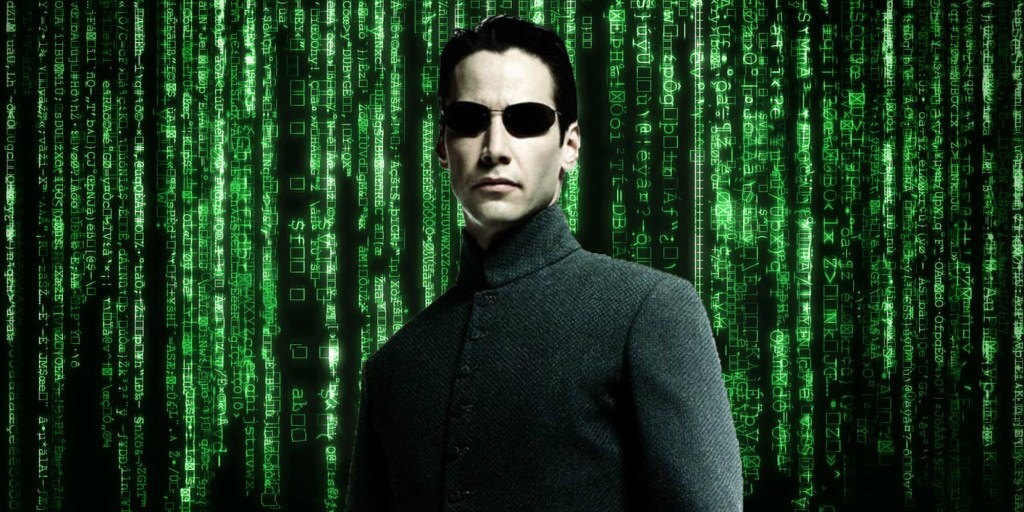
A great example of this is the Matrix.
After an insane prologue we’re left wondering what the hell happened as the world gets crazier and crazier for a full half hour. Then by the time we’re sat in a chair with Morpheous we’re on the edge of our seats as he info dumps at us. That is amazing writing.
Imagine if they’d begun with the infodump? Would that be as fun to enjoy, would you feel as invested in the world? Would hearing how it works be a hit of that sweet, sweet dopamine in itself? No.
Invisible exposition.
This is amazing when done well, the way to make it invisible is to inculcate it into the script.
Instead of us opening with
“Hey, so I heard you had an affair Jeff, how was it?”*
We could instead lead with…
Jeff sat down at the table with a heavy thud. Tired, he noticed a dark red smudge on his collar. Yesteday’s lipstick.
“What’s that?” Julie asked.
“Nothing,” Jeff lied, “Just some red wine.”
Bingo bango exposition tango.
The audience gets a little boost, they’re like oh shit my man’s having an affair, and I figured it all out by myself. I’m a motherfucking drama detective.
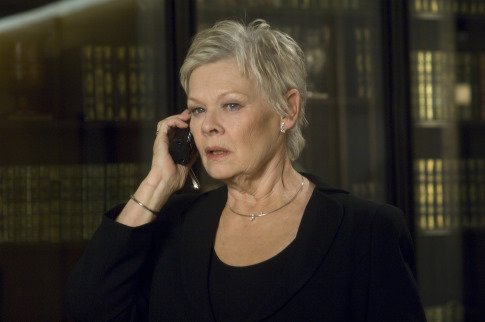
But what about people like M in James Bond?
M stands for Martin. I’m like 90% sure.
Ah yes, the character in a spy thriller that exists purely to deliver exposition. It’s a convention in spy thrillers, so audiences kinda just give it a pass. An acknowledgement that, cause of the genre, knowing all this shit early will pay off big time later. That’s the power of genre.
Similarly in other genre’s where a lot of exposition is required, like Fantasy or Sci Fi, audiences will be a touch more forgiving of clunky exposition. Think of this like an overdraft, yeah you have a little more leeway than normal, but you never want to have to use it. Well woven exposition, especially in the genres that need lots of it, is a huge factor in the quality of your writing.
Of course, just because it’s a convention of the genre, doesn’t mean it wouldn’t be EVEN BETTER to have your exposition meet the two above rules. M neutrally telling bond the only vulnerability he his opponent has is his left eye, that’s fine. M telling him during a training montage of him failing to snipe the eye on a target from 100m, that’s entertaining in it’s own right.
This is why heist movies, like Mission Impossible Ghost Protocol, often have the exposition delivered whilst a hypothetical version of the heist is played out. The exposition is nigh invisible as a backdrop to fun heist stuff.
Another thing you’ll often see is the newbie to this world. This is basically just a device so it makes sense for characters to explain shit to them as an audience surrogate. This is most used in very different worlds, like Brave New World or Harry Potter. This makes the exposition a natural part of the conversation and their character development.
The easiest way to think of invisible exposition, is double duty. If something is exposition, but also serves another role: providing subtext, building tension, or giving the audience that sweet, sweet action. Then that’s some seriously good stuff.
Yeah that’s all good, but you promised me a maxim…
Your exposition is like your genitals, keep it hidden, unless people really want to see them.
If you scrolled down here for the maxim, it’s a three minute read: scroll up.
*I know you’re probably laughing but I’ve read dialogue exactly like this.





 The Fellowship Of Ink